Natasha, Pierre, and the Great Comet of 1812
by Dave Malloy, Adapted from War & Peace, by Leo Tolstoy
Directed by Matthew Reeder
Ball State University
University Theatre
February 7th - February 14th, 2025
Production Team:
Choreographer: Kenny Shepard
Music Director: Thomas Hall
Scenic Design: Cade Sikora
Costume Design: Alexander Stearns
Lighting Design: Jeff Stover
Sound Design: Brandon Reed & Ryan Dafforn
About The Play
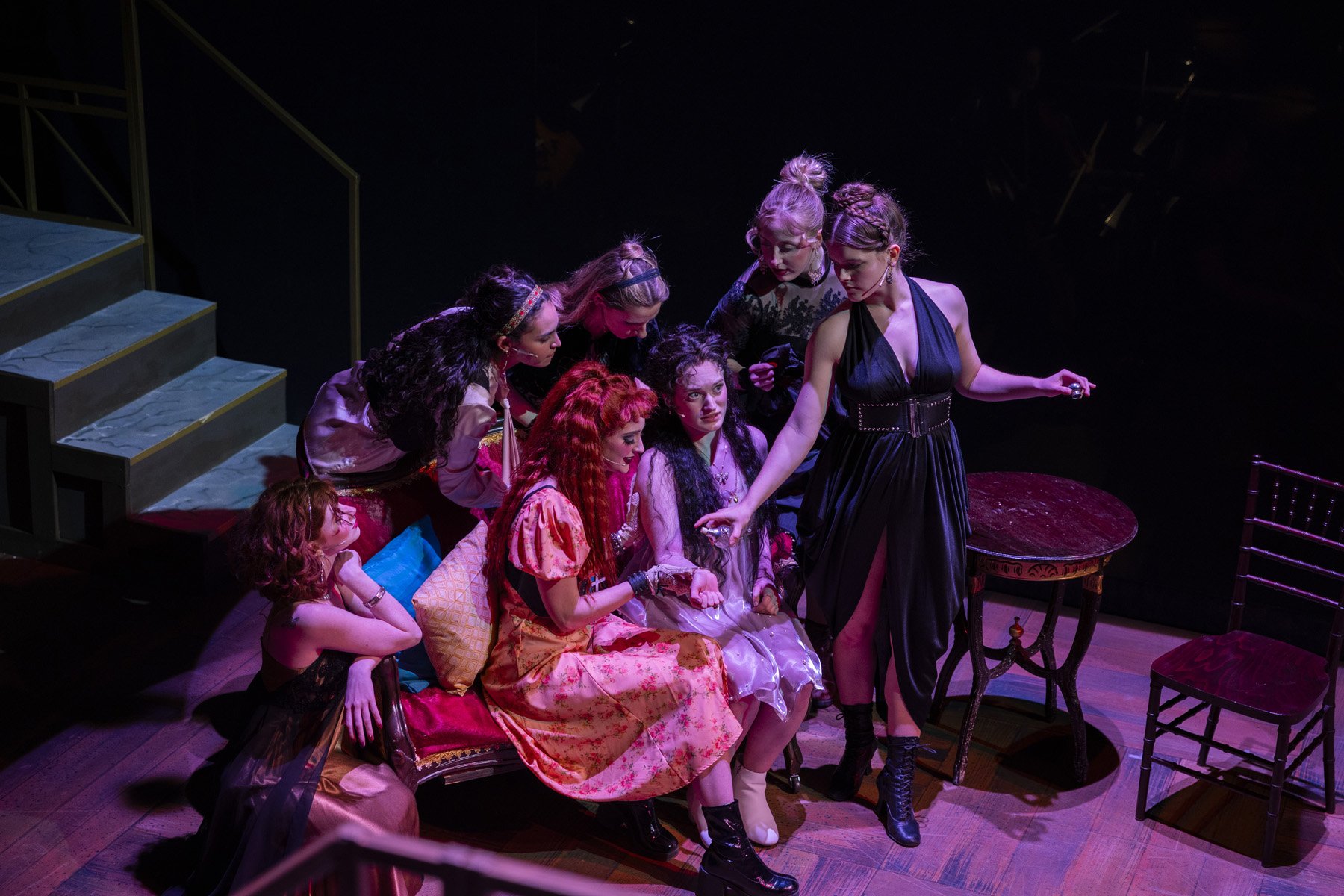
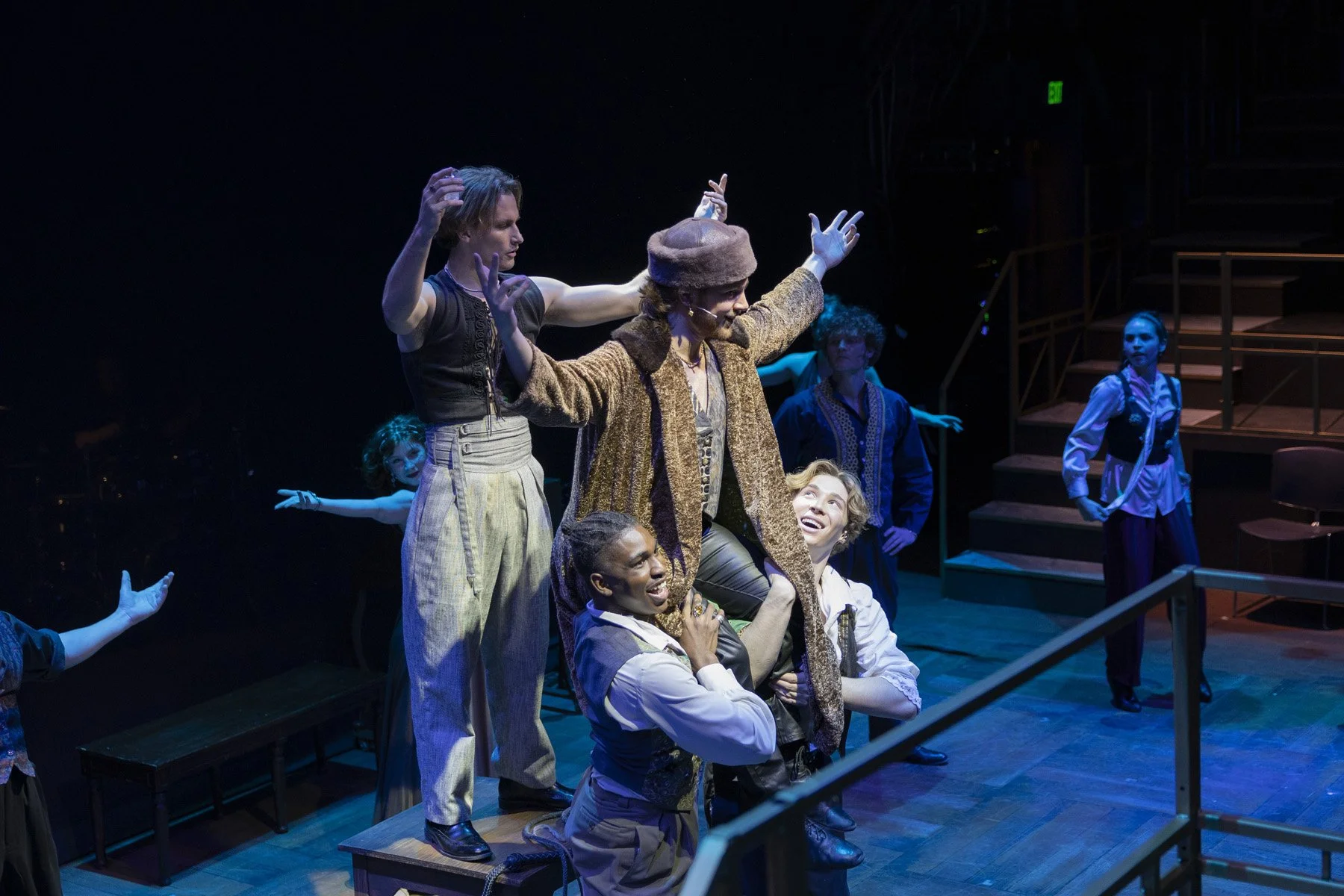
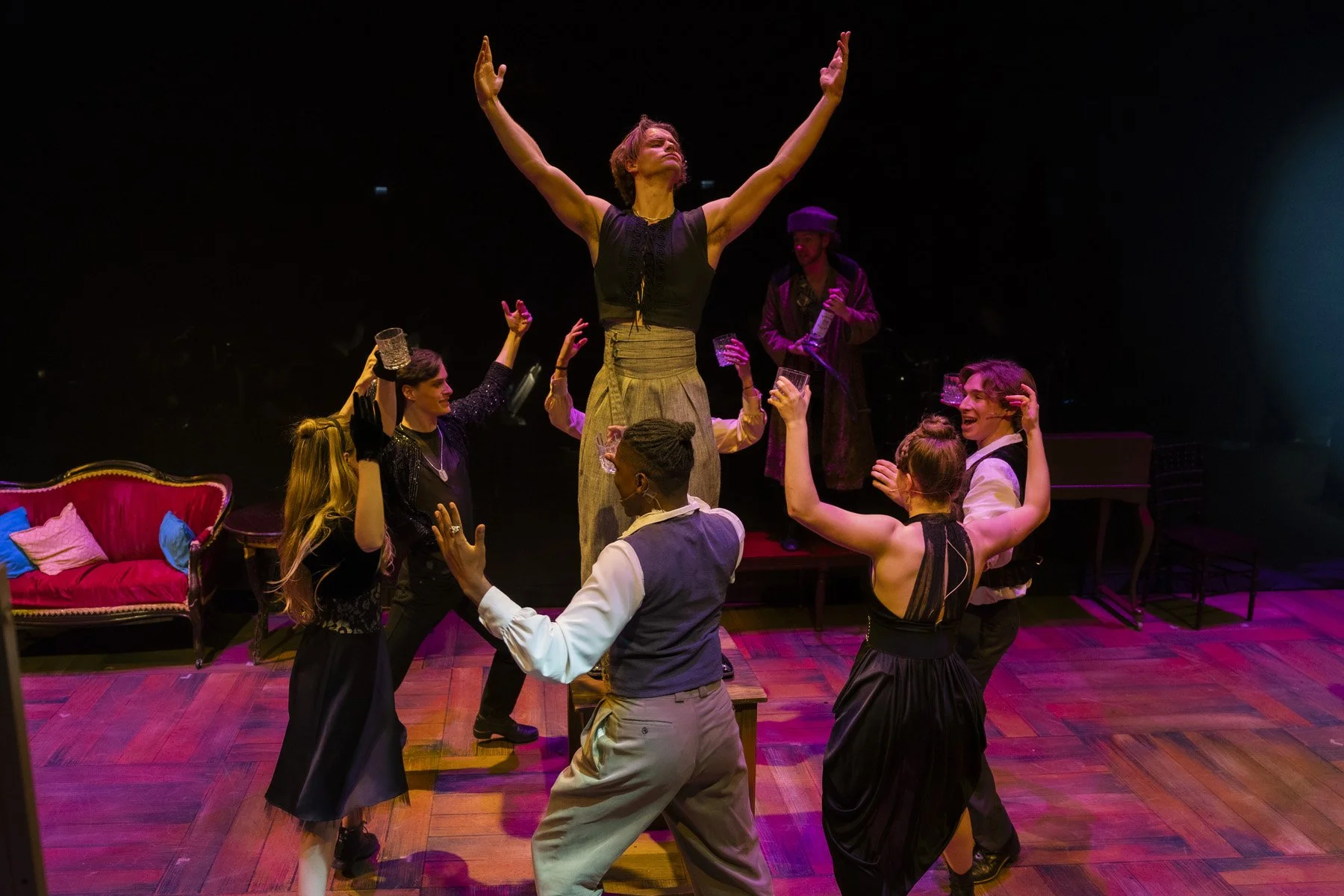
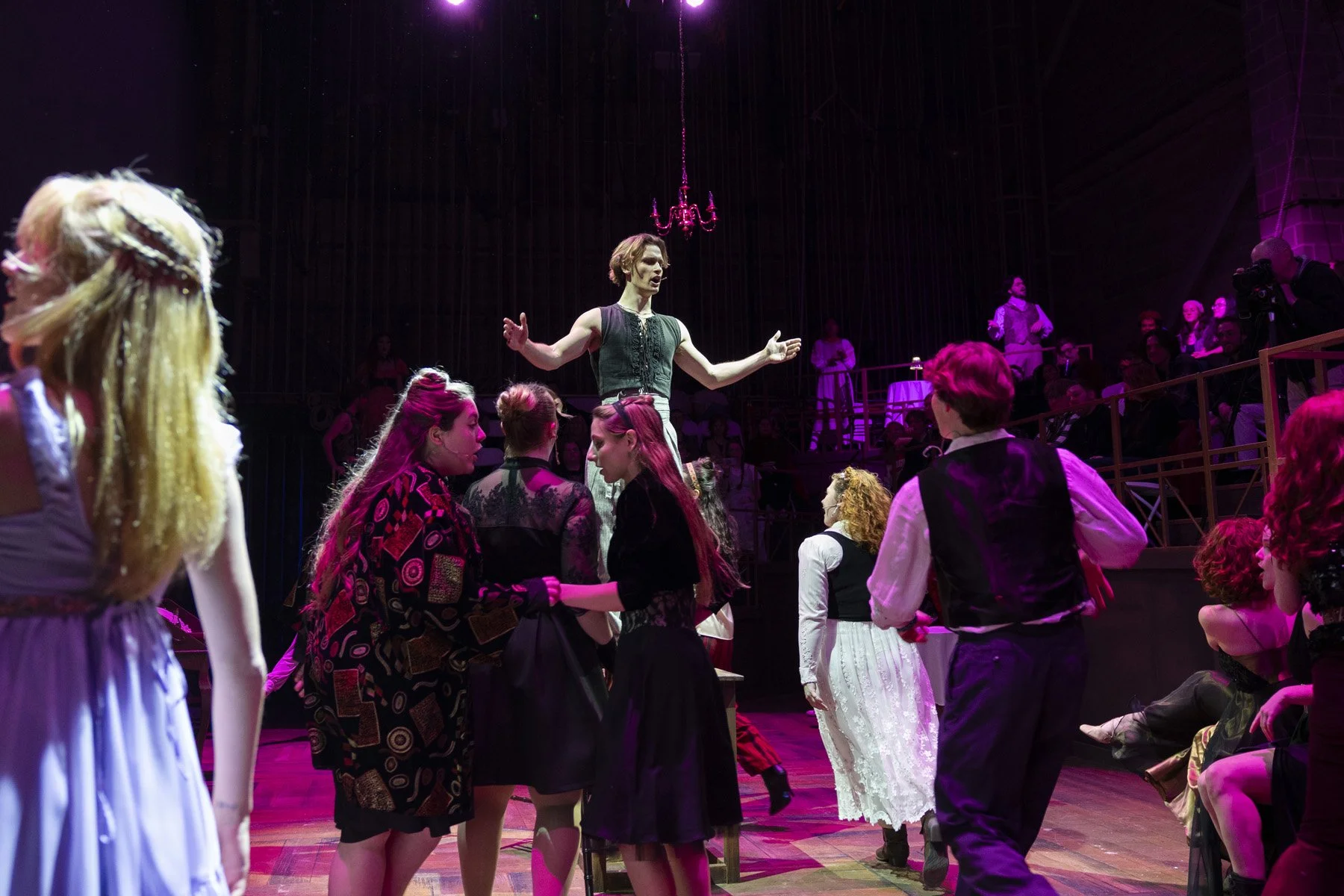
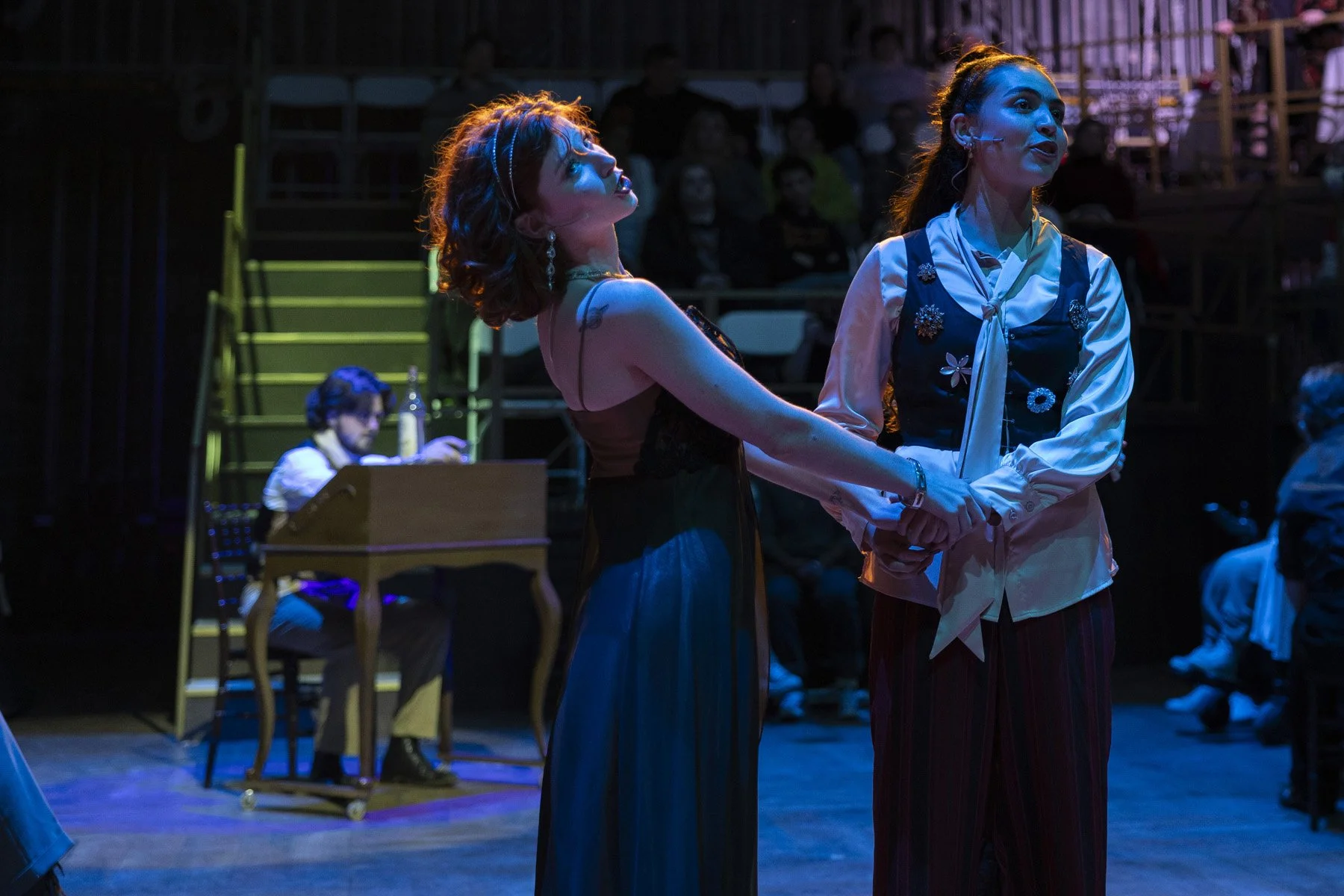
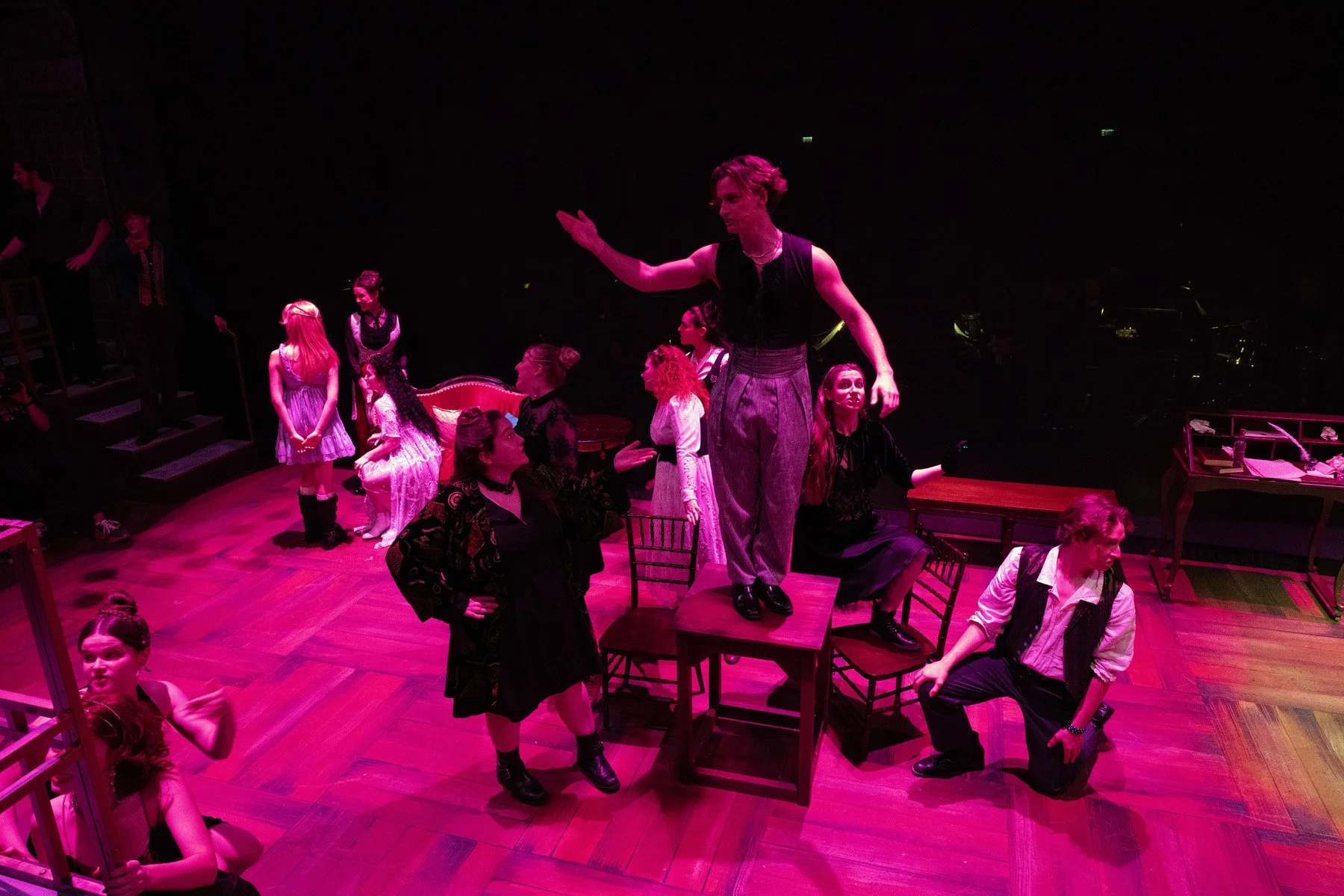
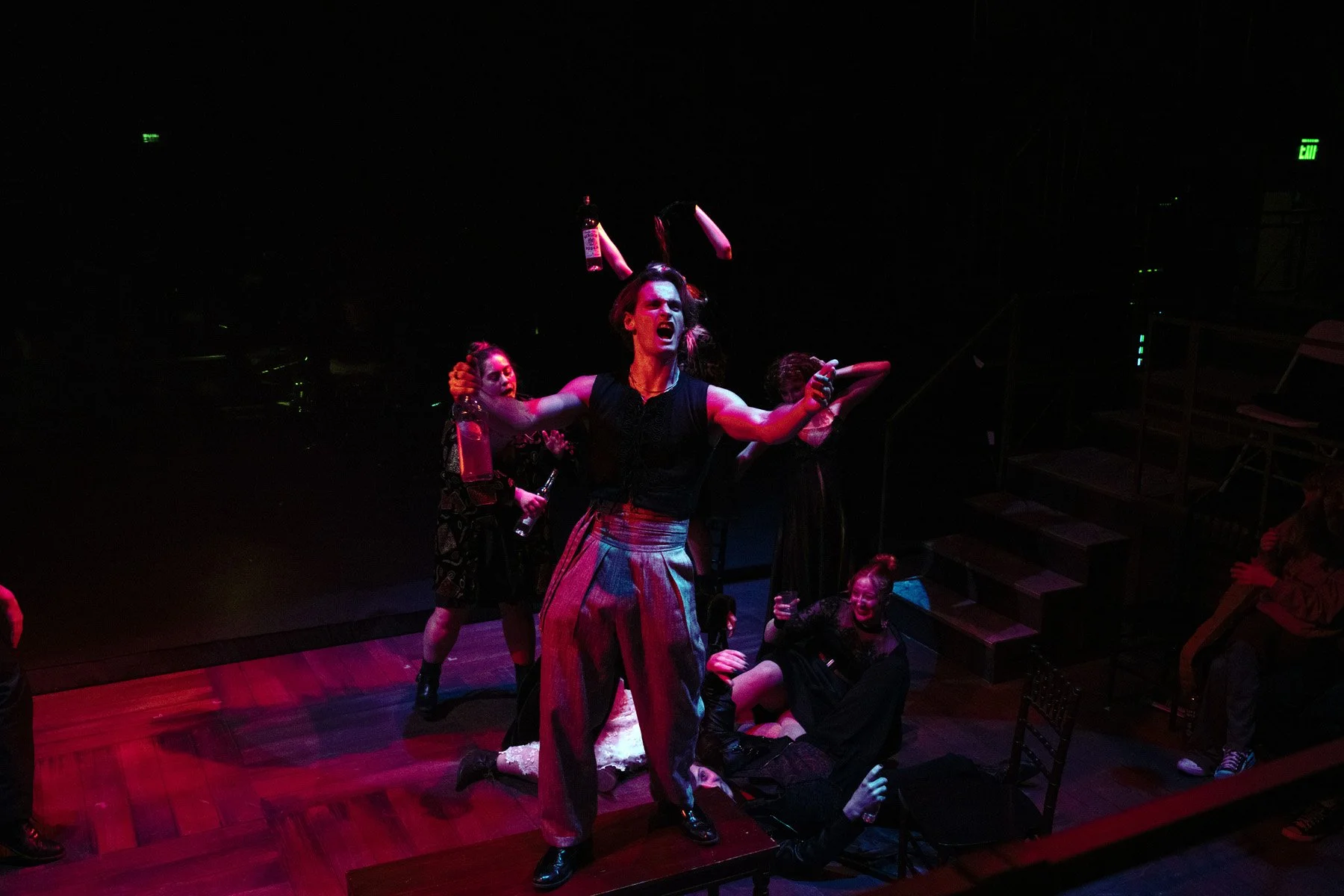
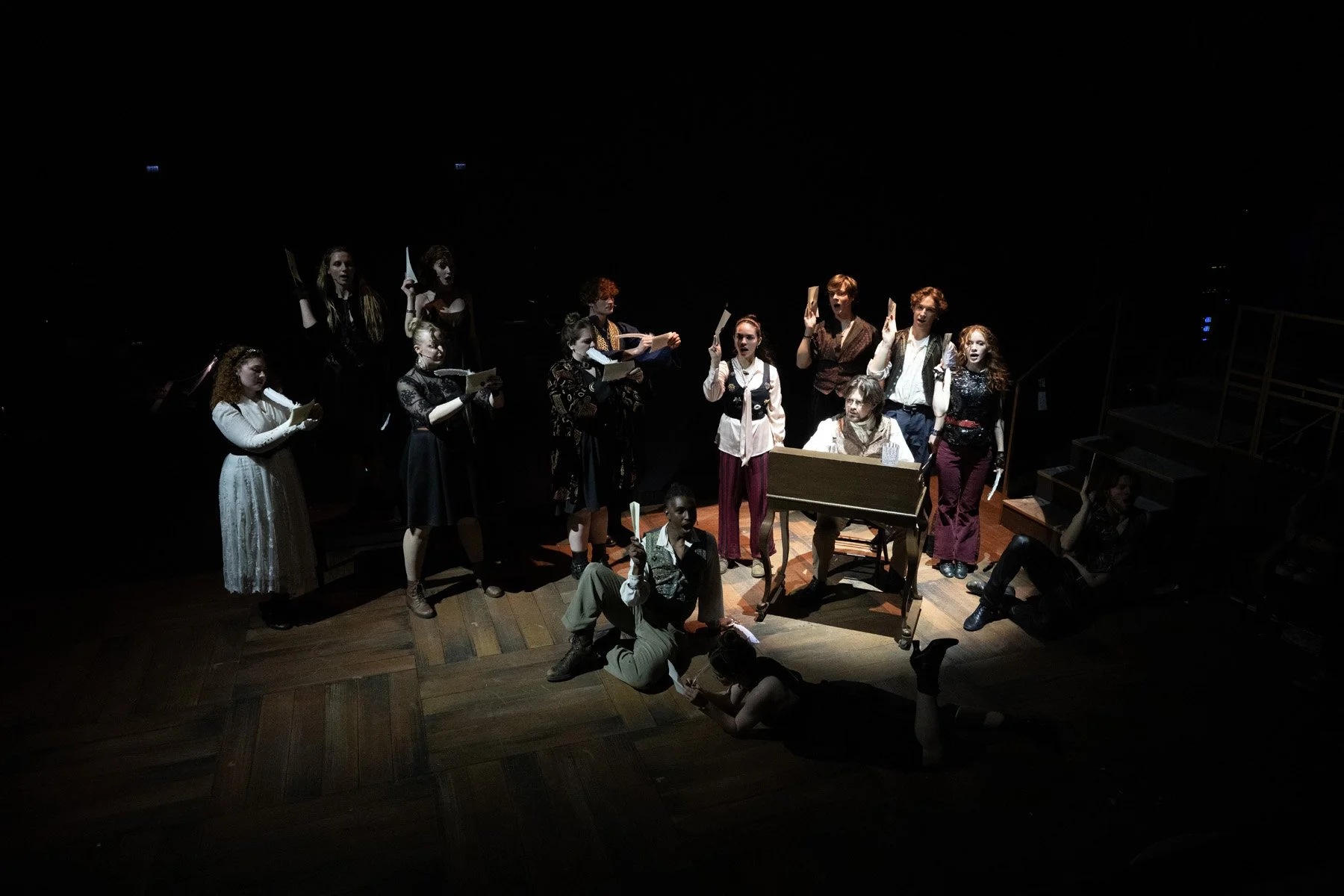
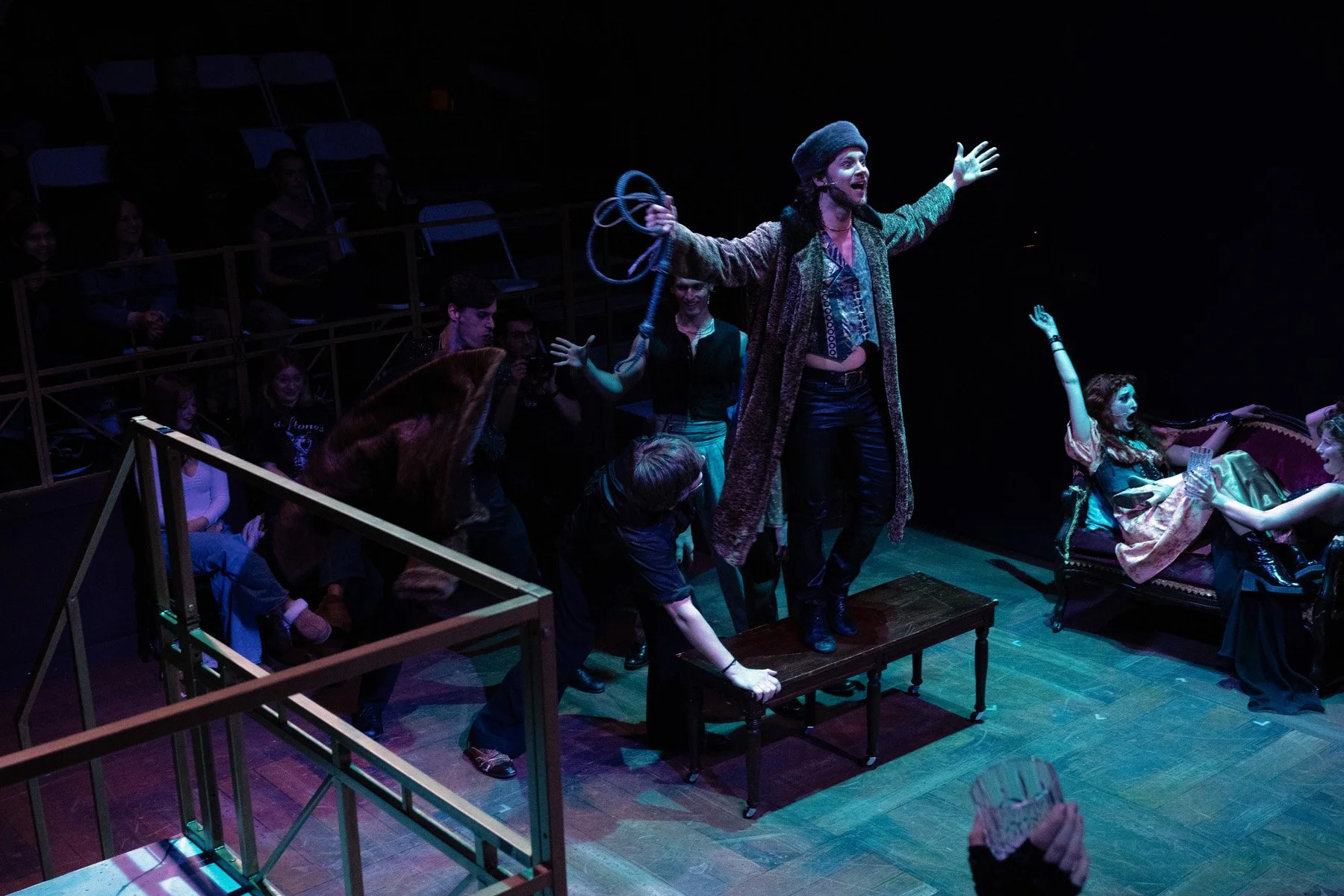
Natasha, Pierre, and the Great Comet of 1812, is a sung-through musical adaption of a 70-page segment from Leo Tolstoy’s 1869 novel, War & Peace. It focuses primarily on Natasha’s romance with Anatole and Pierre’s search for meaning in his life. The show contrasts the wild, chaotic lives of Russian aristocrats with impending doom. It’s a classic story of passion and love. Natasha is torn between her fiance, Andrei, and the mysterious Anatole. As all the characters try to knock sense into Natasha, she adamantly ignores them. The push and pull of passion and practicality are common themes throughout the show. Follow your heart or follow your head.
Audio clips of the live mix are not included due to recordings not accurately representing the theatre space and for copyright purposes.
Please check with the producing organization if interested in quality of the mix, which I proudly stand behind.
Photos taken courtesy of David “Kip” Shawger, Brenden Rowan, Peyton Kistler, and Kat Hawthorne.
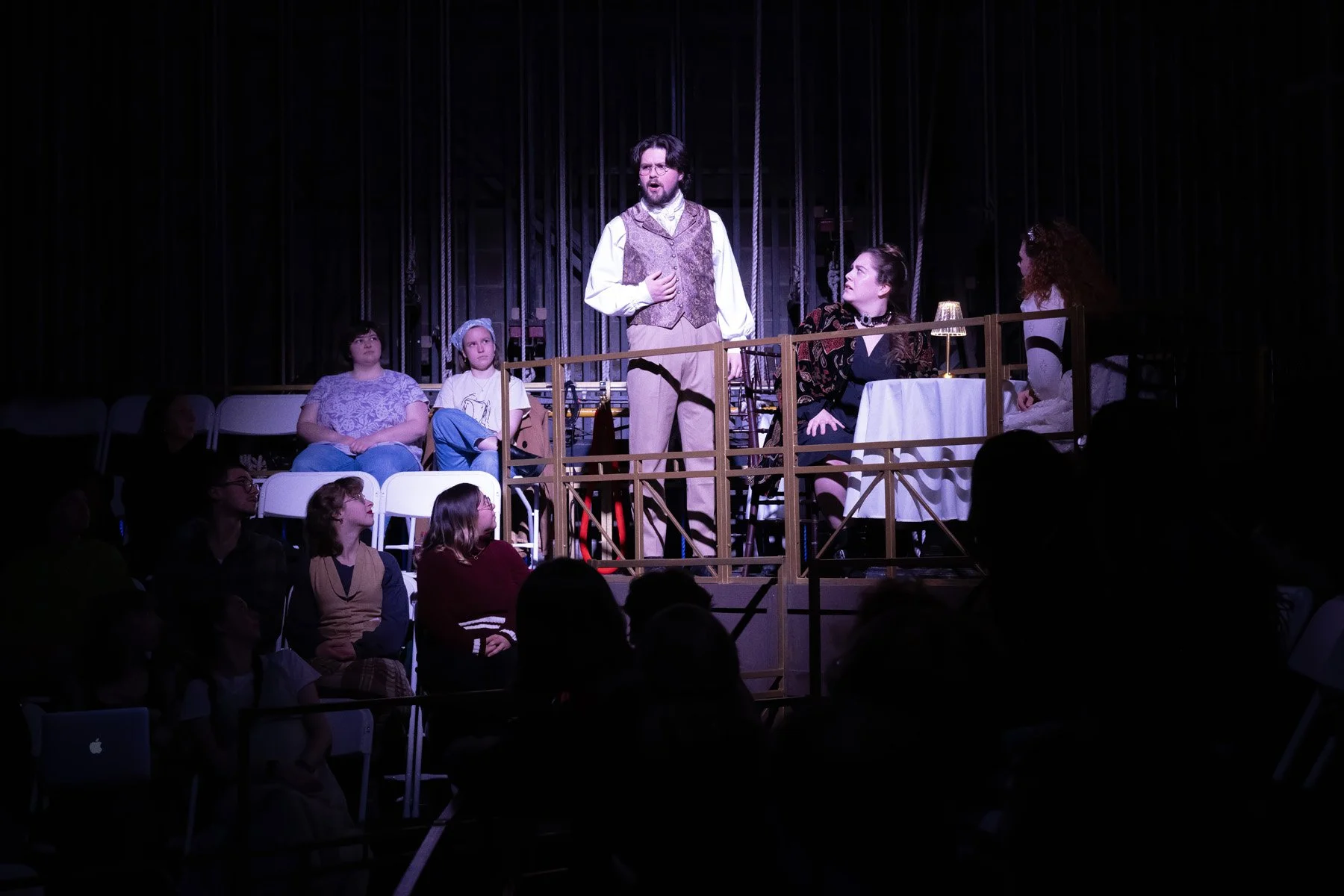
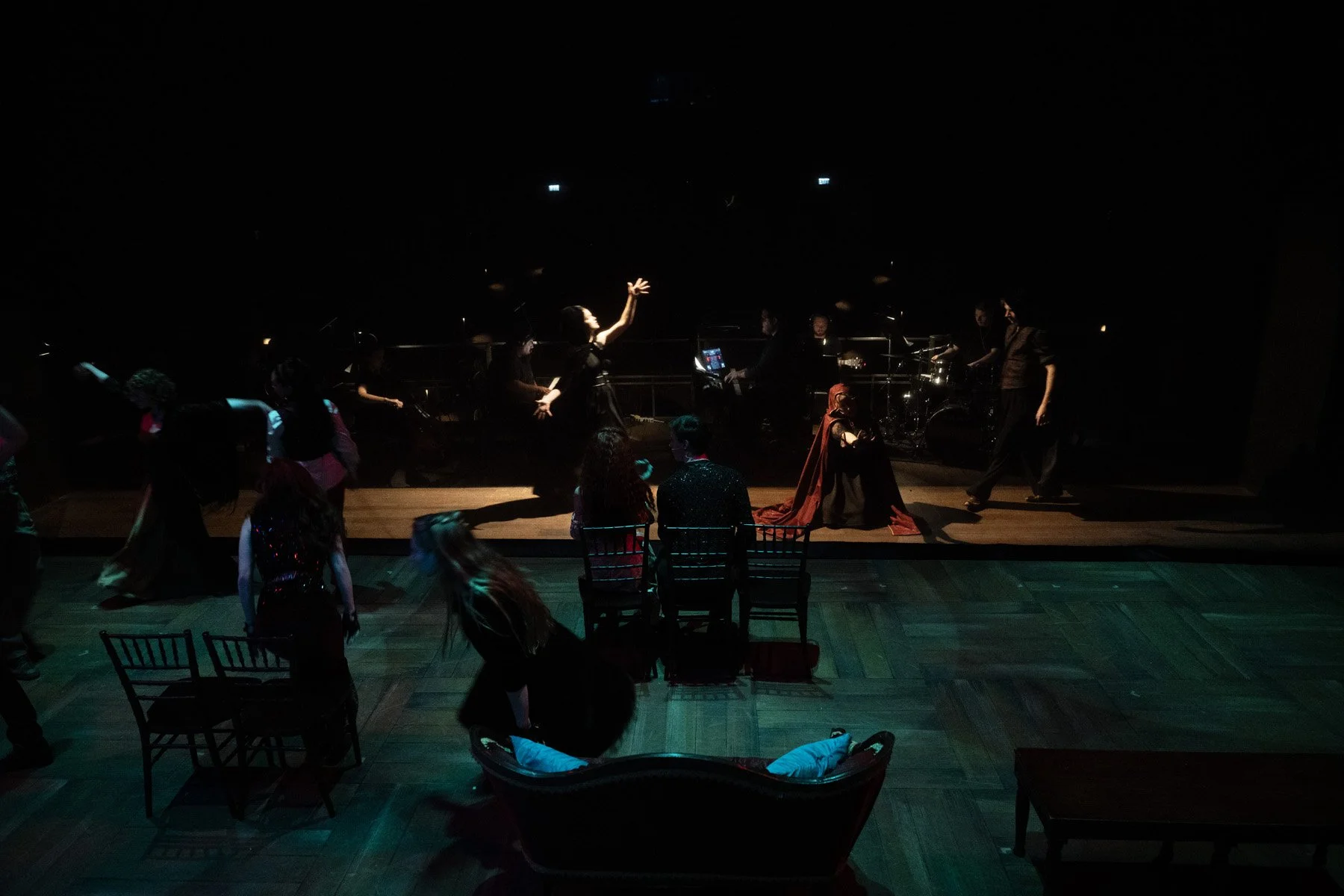
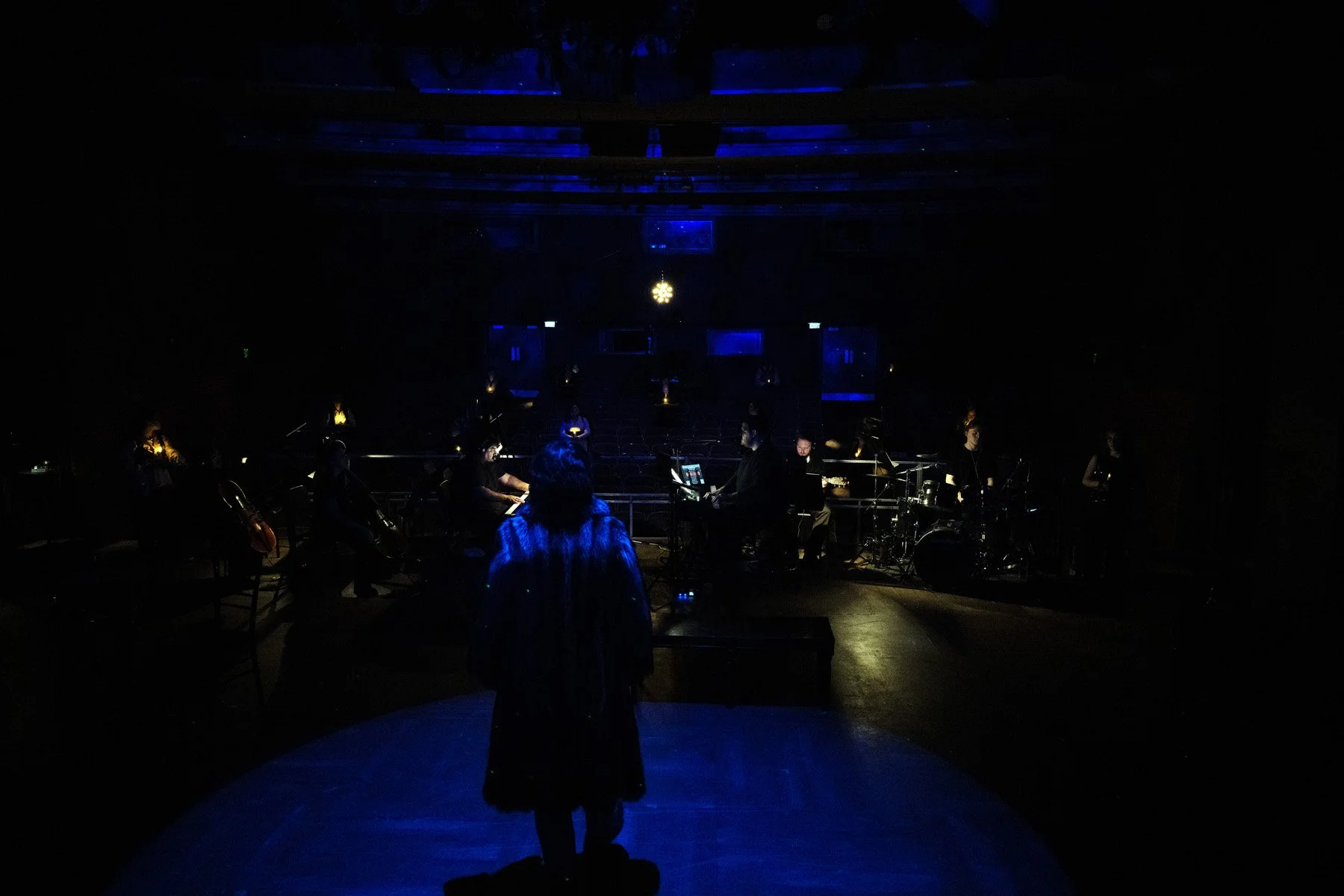
This production was the final performance in the university’s space, before a huge remodel. One over forty years in the making, therefore we wanted to have one final giant immersive musical to really cap it off. From the get go, we knew that the audience would be on stage instead of out in the house. Almost like they are viewing a mirror into the history of the space. In addition, I was working with a student as my co-designer teaching them my process on how to design a musical. All of this of course created a difficult challenge.
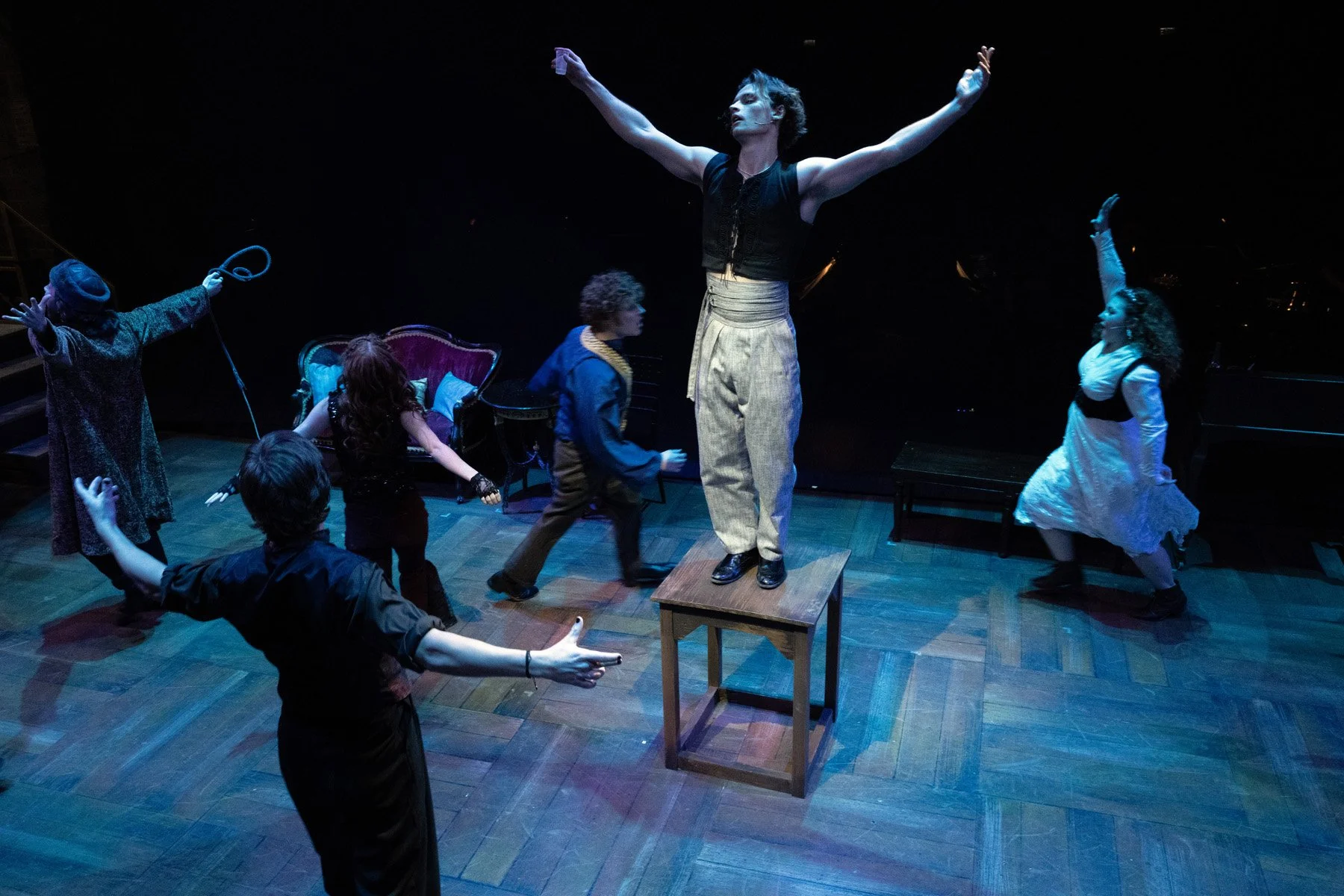
Once we finally had a layout of the audience configuration, I went to task on figuring out a system design. I knew that the cast would be all over the theatre, so it was important to me that the vocal delivery was the most important aspect of the design. I decided that we would have two separate systems, one for the vocals, and for the orchestra. This allowed me to always make sure the vocals stayed on top. I was also concerned about feedback, so I made the choice for all twenty-two actors to be on “boom” rigs so I can get the most gain before feedback possible. From there I made sure to tune my system specifically for vocal clarity, and made sure to ring out any problematic frequencies.
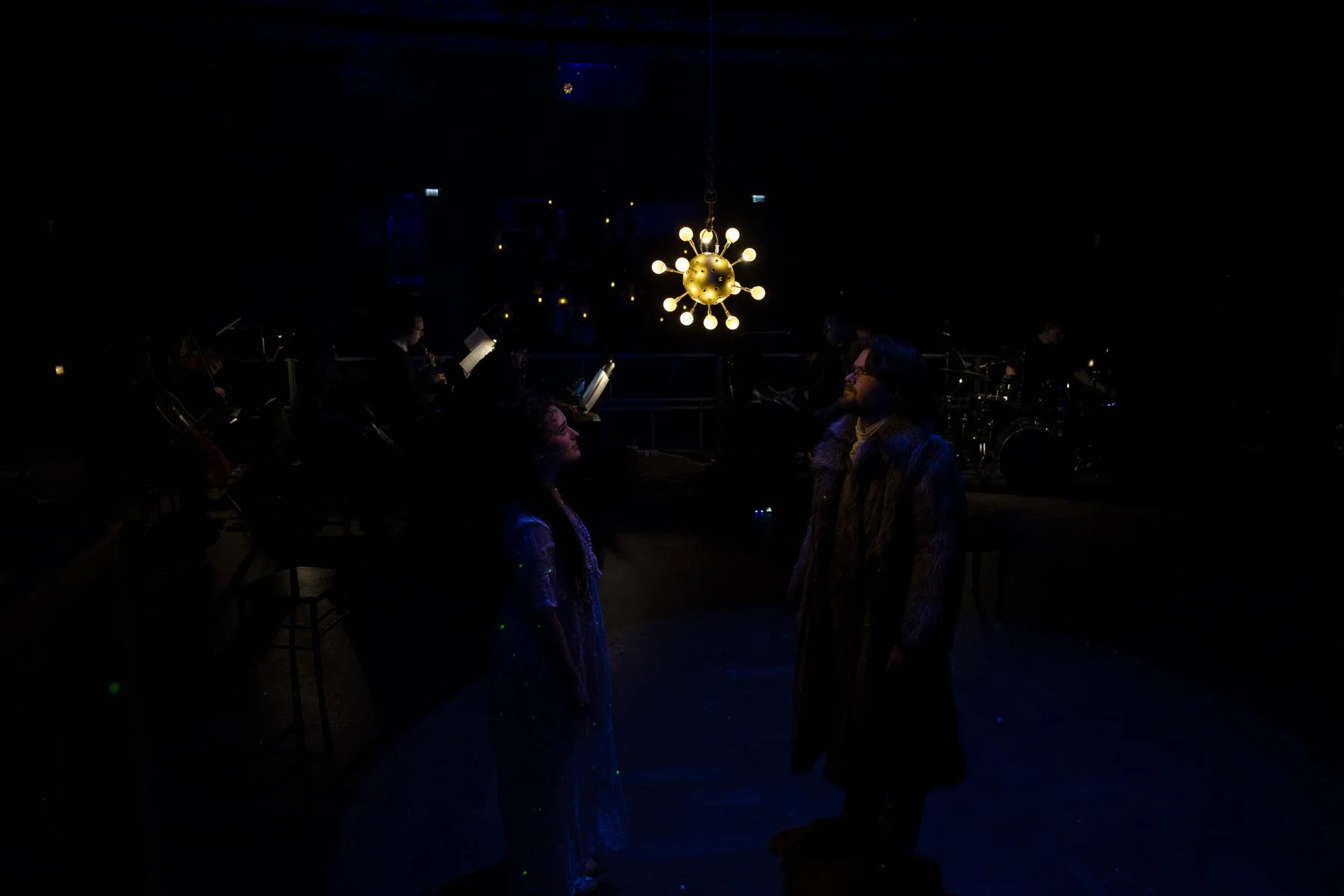
The orchestra was placed upstage of the scrim, near the downstage edge of the traditional layout. Essentially putting them right there with the cast. I decided to hang the speakers for the orchestra directly in front of them near the proscenium wall to place the imaging of the sound near them. To also help with the orchestra not over powering the cast, we made sure to make the drum set was electronic with a Roland E-Kit. Other than that, everything else was primarily acoustic, with only the two keyboards being Mainstage rigs into direct boxes. The cellos and bass were mic’ed with DPA 4099’s, the reeds used both a AKG C414 (high) and a Shure PG81 (low). The viola was also a Shure PG81. The acoustic guitar was plugged straight from the pickup into a direct box. In addition, the music director fired tracks and a click track from a QLab computer that was next to him. A large chunk of the musical was tracks playing synths or electronic beats.
The overall mix of the show was more on the reinforcement side and aimed to feel as natural as I could get it, without sacrificing vocal clarity. I’m proud to say that not a single word was lost. It was also my first time working with a musical, where a large portion was just tracks. We ended up separating the tracks from the band DCA to be it’s own so we could ride it throughout. In the end I was extremely satisfied with the design and felt it was a proper send off for the space.
The Sound Design